

Back to podcast main page, go to RSS feed
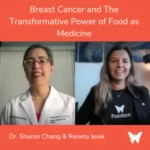
Welcome to the very first episode of the Food as Medicine podcast, hosted by Reneta Jenik, founder of Foodom. In this episode, we delve into the profound connection between diet and health with our esteemed guest, Dr. Sharon Chang, a renowned breast cancer surgeon with nearly 15 years of experience at Kaiser Permanente.
In this episode, Dr. Sharon Chang, discusses the role of food in cancer management and prevention. She emphasizes that more than 40% of cancers are preventable and lifestyle-related, including breast cancer. A predominantly whole food, plant-based diet has been shown to have tremendous preventive benefits. Specific foods like flax seeds, which are rich in anti-inflammatory and antioxidant properties, can help with breast pain and promote healthy gut bacteria. Dr. Cheng also debunks the myth that soy is harmful for breast cancer patients, highlighting its benefits. Maintaining a healthy weight through a holistic lifestyle approach is crucial for breast cancer prevention.
Introductions:
- Reneta Jenik introduces the podcast and herself, emphasizing her mission to advocate for the transformative power of food.
- Dr. Sharon Chang shares her background and current roles, including her work at Kaiser Permanente and training Stanford residents.
The Impact of Diet on Cancer:
- Dr. Chang discusses the significant role lifestyle plays in cancer prevention, with over 40% of cancers being preventable through lifestyle changes.
Nutrition and Health:
- The importance of a whole food, plant-based diet in reducing cancer risk and promoting overall health.
- The benefits of flax seeds, rich in anti-inflammatory and antioxidant properties.
Foods to Avoid:
- Recommendations to minimize processed foods and red meat due to their inflammatory properties.
Dense Breasts and Obesity:
- An exploration of the challenges posed by dense breasts in cancer detection and the increased risk of breast cancer associated with obesity.
- Dr. Chang explains how maintaining a healthy weight through diet and exercise can reduce the risk of developing cancer, particularly breast cancer.
Common Myths and Misconceptions:
- Debunking the myth that soy should be avoided in breast cancer prevention, highlighting studies showing its benefits.
Maintaining a Healthy Weight:
- The role of nutrition in achieving and maintaining a healthy weight, focusing on nutrient-dense, fiber-rich foods.
Final Thoughts:
- Reneta and Dr. Chang reflect on the holistic approach to health, emphasizing the importance of dietary choices in cancer prevention and overall well-being.
- A holistic health approach addresses 6 pillars, including eating a balanced diet rich in fruits, vegetables, whole grains, and lean proteins while avoiding processed foods and unhealthy fats. Regular exercise, quality sleep, and effective stress management through techniques like meditation are essential. Building strong social connections and pursuing meaningful activities that align with personal values also play a crucial role in overall well-being.
Key Takeaways
- Whole Food, Plant-Based Diet: Focus on consuming minimally processed foods rich in phytonutrients and fiber.
- Anti-Inflammatory Foods: Include foods like flax seeds, fruits, vegetables, and whole grains to reduce inflammation and support overall health.
- Avoid Ultra-Processed Foods: Minimize consumption of foods high in additives and low in nutrients to prevent chronic diseases.
- Soy is Safe: Contrary to common myths, soy consumption is beneficial and can lower the risk of breast cancer.
- Healthy Weight: Maintaining a healthy weight through a nutrient-dense diet and regular physical activity is vital for cancer prevention. Reducing BMI lowers inflammatory processes and hormonal imbalances associated with cancer risk.
- Obesity and Diabetes: Managing obesity and diabetes is crucial as they complicate cancer risk and treatment. A healthy diet and lifestyle can mitigate these factors.
- Dense Breasts: While you can’t change breast density, a healthy diet and lifestyle can help manage other risk factors and support overall breast health.
Resources:
- Medically Tailored Meal options on Foodom
- Vegan dishes on the Foodom menu and chefs to cook it
- Kaiser Permanente lifestyle medicine
- American Cancer Society: Diet and Physical Activity
- Dr. Sharon Chang LinkedIn
Keywords:
food, cancer management, prevention, breast cancer, whole food plant-based diet, flax seeds, soy, healthy weight, holistic approach
——————————————————–
Podcast Disclaimer:
- Not Medical Advice: The [Podcast Name] podcast and its content are for informational purposes only. The content is not intended to be a substitute for professional medical advice, diagnosis, or treatment. Always seek the advice of your physician or other qualified health provider with any questions you may have regarding a medical condition.
- Professional Opinions: The views and opinions expressed in this podcast are those of the speakers and do not necessarily reflect the official policy or position of [Your Company Name] or any other agency, organization, employer, or company.
- Accuracy of Information: The information provided in this podcast is believed to be accurate and reliable at the time of broadcasting. However, [Your Company Name] makes no representation or warranty as to the completeness or accuracy of any information on the podcast or found by following any link mentioned in the podcast.
- Listener Responsibility: Listeners should use their discretion and judgment in applying any information discussed in the podcast to their own health and well-being. Any action you take upon the information provided in this podcast is strictly at your own risk.
- Contact Information: For more reliable information, consult with your healthcare provider or other trusted sources. Links to external sites and resources mentioned in the podcast are provided for convenience and do not constitute endorsement of the information, products, or services provided by those sites.
- Liability Disclaimer: Foodom does not assume any liability for any injury, loss, or damage incurred as a result of any use or reliance upon the information and material contained within or mentioned on this podcast.
——————————————————–
Episode Transcript
Reneta Jenik (00:01.416)
Hello, dear listeners. I’m Reneta Jenik, your host on this flavorful journey of health, wellness, and expanding consciousness. Welcome to the Food as Medicine podcast, the place where food meets medicine. I’m the founder of Foodom, a marketplace for healthy meals and medically tailored meals cooked by local chefs at your home, starting from $5 a serving. I’m very passionate about advocating for the transformative power of food.
I have embarked on a mission to share knowledge and stories on how what we eat impacts our health. So join us, and you’ll have a front row seat as medical experts share invaluable information, tips, and advice on managing chronic conditions and preventing them in the first place, focusing on a holistic approach to well-being.
Whether you’re personally navigating a chronic condition, supporting a loved one through their health journey, or simply seeking knowledge to lead a healthy life, our podcast is here to be your trusted companion.
For our first episode, I’m thrilled to be joined by the amazing Dr. Sharon Chang. Dr. Chang is a breast cancer surgeon who has been caring for cancer patients at Kaiser Permanente for almost 15 years. She’s a Bay Area native who completed medical school at Harvard, a surgery residency at UC Davis, and a cancer surgery fellowship at MD Anderson before returning to the Bay Area to join Kaiser Permanente. Her current roles include performing surgery for Kaiser patients with breast cancer, training Stanford residents, and co-directing the Kaiser Northern California Breast Surgeon Group. Welcome, Sharon. It’s so amazing to have you here with us.
Dr. Sharon B. Chang, M.D. (01:53.503)
Thank you so much for that beautiful introduction, Reneta. I am very excited to be your first guest and to be on this journey with you, sharing with all the listeners the amazing powers of Food as Medicine.
Reneta Jenik (02:09.928)
Yeah, maybe we can start by you sharing why you care so deeply about food and cancer management. Where did this passion come from?
Dr. Sharon B. Chang, M.D. (02:19.946)
Yeah, it turns out that more than 40% of cancers are actually preventable and are lifestyle-related. Unfortunately, breast cancer is one of them. This doesn’t mean that everyone who has breast cancer developed it solely due to lifestyle, but there are definitely things we can do with our lifestyle to help reduce the risk of cancer. I see this as an opportunity not only to help people who are battling cancer but also to prevent cancer from starting in the first place.
Reneta Jenik (03:00.168)
That’s incredible. Wow, 40%. That’s like almost one out of every second person. Incredible. How does our diet influence our health and potentially reduce the risk of cancer? Can food actually serve as a medicine to prevent and manage cancer?
Dr. Sharon B. Chang, M.D. (03:22.249)
Yeah, when you think about it, we are what we eat. Every single molecule in our body comes from what we ingest. It turns out that diet has a profound impact on cancer risk, and food actually is medicine. We have all sorts of toxins and exposures from our everyday lives, but the food we eat can bolster our immune systems, help with DNA repair, and defend us against the factors that cause cancer.
Reneta Jenik (04:02.856)
Wow, that’s incredible. Especially when you go through treatments, your body changes in ways that need more supportive nutrients. Are there specific foods or dietary patterns associated with a lower risk of breast cancer?
Dr. Sharon B. Chang, M.D. (04:23.881)
Yes, there’s strong evidence showing that a predominantly whole food, plant-based diet has tremendous preventive benefits. Whole foods mean things that look pretty much like how they came out of the ground with minimal processing. Plant-based doesn’t mean vegan necessarily, but just incorporating more plants into your diet, more sources of plant-based protein, and less animal-based protein. There is strong evidence supporting this diet in preventing cancer and many other chronic conditions.
Reneta Jenik (05:05.896)
In one of our conversations, you mentioned the magic of flax seeds. Maybe you can share a little bit about that.
Dr. Sharon B. Chang, M.D. (05:14.537)
Yeah, flax seeds are a whole bunch of goodness wrapped up in a tiny package. They pack a bundle of benefits, ranging from anti-inflammatory and antioxidant activities. For that reason, I often prescribe them to my patients with breast pain due to inflammation. There’s a condition called fibrocystic change where hormonal changes, particularly around menopause, can cause a lot of breast inflammation. Flax seeds are beneficial for that. They also pack a lot of fiber and many beneficial phytonutrients, promoting healthy bacteria in your gut, which supports your immune system and helps fight cancer more effectively. In summary, flax seeds can help your body fight and prevent cancer.
Reneta Jenik (06:28.808)
That’s amazing. Since you told me about them, I’ve been eating flax seeds every day. I’m probably in pre-menopause, and I’ve noticed the things you mentioned about dense breast tissue. Every day, religiously, I take a teaspoon of ground flax seeds. Thank you for that. So what other types of foods can people consume to reduce cancer risk that are antioxidants, anti-inflammatory, and also rich in phytonutrients?
Dr. Sharon B. Chang, M.D. (06:45.641)
Your best defense is fruits, vegetables, and whole grains. People say “eat the rainbow,” and that literally means eating a variety of colorful fruits and vegetables. The things that give these foods their beautiful colors are incredibly good for you. The less processed they are, the more of these nutrients you get. Eating fresh, whole fruits and vegetables is incredibly beneficial.
Reneta Jenik (07:56.36)
Amazing. We’re actually editing some blog posts about how to get the most out of your spinach by cooking it in ways that boost its nutrients. We can create more posts about broccoli and other superfoods. Are there specific nutrients or dietary supplements individuals should consider for breast cancer prevention?
Dr. Sharon B. Chang, M.D. (08:10.985)
It’s really not about supplements or medicines per se; it’s more about overall eating patterns. A whole food, plant-based diet gives you so many vitamins, minerals, and phytonutrients all together in a natural package. There are many things in these foods that we don’t even know about yet. You get much more benefit from eating whole foods than from taking a pill because you get everything, including the things we don’t know about.
Reneta Jenik (09:18.312)
That’s amazing. Are there specific foods that people should avoid to prevent cancer or while recovering after surgery?
Dr. Sharon B. Chang, M.D. (09:33.033)
Definitely, minimizing super-processed foods is important. These foods often strip away the good stuff and add chemicals that may not be beneficial. After surgery, your body uses protein to heal wounds, so it’s crucial to eat plenty of protein. Over the long term, I recommend plant-based protein, but around surgery time, I tell patients to eat whatever protein is palatable.
Reneta Jenik (11:47.144)
Just eat it, yeah. From the Mediterranean diet, fish and poultry are probably better than red meat, right?
Dr. Sharon B. Chang, M.D. (12:07.017)
Yes, unfortunately, red meat and saturated fats are the most inflammatory. Inflammation can exacerbate chronic diseases, including cancer. By eating red meat and saturated fat, you’re adding fuel to the fire. Reducing inflammation is crucial for both prevention and recovery.
Reneta Jenik (12:43.432)
That’s true for prevention as well. Less inflammation means a healthier, longer life. The same advice applies to everyone who wants to live healthier.
Dr. Sharon B. Chang, M.D. (12:58.921)
Absolutely.
Reneta Jenik (13:01.448)
So, another question: what are some myths and misconceptions about the impact of diet on breast cancer?
Dr. Sharon B. Chang, M.D. (13:15.483)
One of the most common questions is about soy. Many believe they should eliminate soy because it contains natural phytoestrogens, and some breast cancers are fed by estrogen. However, large-scale studies in Japan, where soy consumption is high, show that women who consume more soy have lower risks of breast cancer. Soy is a wonderful source of protein and is totally fine to eat.
Reneta Jenik (14:52.168)
That’s very interesting. I was considering whether to eat more or less tofu and soybeans, so thank you for clarifying. You’ve really helped shape the way I eat. This year, I’ve started eating more plant-based and less animal protein, especially avoiding red meat. It’s been very helpful.
Another question: you mentioned the importance of maintaining a healthy weight for breast cancer prevention. How does diet contribute to this?
Dr. Sharon B. Chang, M.D. (15:37.147)
There are complicated interactions between diet, activity, and metabolism. It’s not just about balancing calories; it’s also about the quality of those calories. A whole food, plant-based diet is nutrient-dense, providing lots of nutrients and fiber, which helps you feel full and supports your gastrointestinal health. This helps maintain a healthy weight because processed foods often provide lots of calories but not much nutrition, leading to overeating. Whole food diet, when you eat it and you get the nutrition and you get the fiber and you feel full and you feel satisfied, then you don’t have the urge to, you know, oh, I need to eat more, I need to eat more. So, so it’s really a lot about, you know, the quality of what you’re eating that can help you, you know, stay at a healthy body weight.
Reneta Jenik (18:00.04)
Yeah, absolutely. And then the health, the healthy weight, what is the correlation between that and breast cancer prevention? Was there any research and studies or something that you found over the years that implies on a correlation?
Sharon B. Chang, M D (18:16.469)
Yeah, yeah. So for better or for worse, breast cancer, post-menopausal breast cancer, is one of the 13 different cancers which the Centers for Disease Control, the CDC, has designated as an obesity-related cancer. And what that means is that the risk of getting these 13 different kinds of cancer is going to be significantly higher in people who are obese.
So that’s one kind of very sobering fact. The other thing is that, you know, there’s a lot more awareness around breast density and how breast density affects breast cancer risk. So we know now that women with dense breasts are at increased risk of getting breast cancer over their lifetimes for a number of different reasons. And many states around the country have passed legislation to notify women that they have dense breasts when they have their mammograms. But I feel like the gap there is it doesn’t really tell you what to do with that information that you have dense breasts and that you may be at slightly increased risk of breast cancer. So the other very sobering fact is that the risk of getting breast cancer if you have dense breasts increases with your body mass index. So.
Reneta Jenik (19:25.256)
Exactly.
Sharon B. Chang, M D (19:42.739)
That means that the heavier you are, the higher the risk is going to be. And the thing that’s even more sobering is that that risk is not linear. So that means like if your weight goes up a little, the risk goes up a little, it’s not linear, it’s actually exponential. And so that means coming back to a little bit of a healthier weight can actually have a huge impact on lowering your risk of getting breast cancer. So we can’t control our genes. We can’t control our breast density, but we can work on the lifestyle factors that can help to keep those risks as low as possible.
Reneta Jenik (20:21.032)
Wow, that’s incredible. Thank you for sharing that. There’s so many people that have, women that have breast, dense breasts. Maybe you could share some success stories where lifestyle and dietary changes have a positive impact on breast cancer from your patients.
Sharon B. Chang, M D (20:42.256)
Yeah, yeah. So what I find is that a lot of my patients are like you, like me, they tend to take care of everyone else first. And that’s the way they’ve been living their lives. It’s been, you know, I have my family to take care of. I have work. I have this, I have that. And so they often don’t give themselves permission to take the time to exercise or to, you know, take time and space for themselves or to prepare a meal that’s going to be healthy for them. You know, they may prepare a healthy meal for their family and but say, you know, I don’t have time so I’m not gonna have a healthy meal for myself. So with a breast cancer diagnosis for better or for worse, it’s kind of a hard stop and it makes people really reflect and say, wow, you know, now I’m faced with this potentially life-threatening diagnosis. What am I going to do with that information? And I really don’t want to die from this. What can I do to improve my odds? The good news is that…
Reneta Jenik (21:55.592)
Yeah.
Sharon B. Chang, M D (22:01.328)
… breast cancer with the current treatments that we have is very, very curable. And the vast majority of people do phenomenally well, live a normal, healthy lifespan. And I’m very grateful for all the medical advances that have led to that. But a lot of times my patients, in addition to the breast cancer, have a lot of other medical issues going on, like diabetes or high blood pressure, heart disease and things like that. And…
Reneta Jenik (22:04.776)
Mm-hmm.
Sharon B. Chang, M D (22:29.902)
The breast cancer is sort of a reset, like, okay, you know, I probably should start taking care of myself, attending to my diabetes, attending to my blood pressure. And so I literally have had patients where we’ve had the consultation and I’ll tell them, you know, yes, you have breast cancer, you’re gonna be fine from that standpoint. I am very worried about your diabetes because your diabetes is actually more life-threatening to you than your breast cancer is. And I think for a lot of people that’s hard to hear, but many of my patients have really taken that to heart. And I’ve just been astounded by how they’ve turned their lives around. And it is so amazing for me to run into my patients and they go, Dr. Chang, because of you and because you told me that when we first met, when I had my breast cancer diagnosis, I started an exercise program. My diabetes is controlled. I’m off the medications. You know, I’ve lost this much weight. I feel so good. I have so much energy. I’ve done this and this. And for me, that I think is probably one of the most rewarding things about being a breast surgeon. It’s not just helping them get through the cancer, but also helping them to really improve their health span. You know, do the things, finally take the time for themselves and attend to themselves and say, you know, I matter. I’m important. I need to take the time. I need to take the space. I need to take the commitment. For me.
Reneta Jenik (23:58.888)
Wow, that’s very touching. Normally, it’s complicated. There are a few things that are happening in our bodies. A cancer wake-up call is a very strong wake-up call. You touched on something that I was very curious to ask you about, maybe to expand a little bit more. Can you share about the lifestyle approach, the holistic approach that you’re taking when you’re treating your patients? You have a very special, unique approach to that. Some consciousness and mindfulness approach to that. Maybe you can share.
Sharon B. Chang, M D (24:32.044)
Yeah, yeah. So as it turns out, there’s a relatively new field of medicine called lifestyle medicine, which I think is incredibly powerful and incredibly transformative and I think will need to be the future of American medicine. But the idea is very simple. I mean, it basically takes all the things that my mom told me to do and it uses them in an intentional way to prevent, treat, and also reverse chronic diseases. It’s based on six pillars, and these six pillars are the whole food plant-based diet, physical activity/exercise, restorative sleep, avoiding risky substances like tobacco, alcohol, stress management, and positive social connections. And by really paying attention to those and being very intentional about those, it is amazing how much better people can feel, how it can transform their lives and really, you know, prevent, treat, and reverse chronic diseases. And it is just such a beautiful thing when somebody can say, yeah, you know, I’m off my medicines for blood pressure. I’m off my medicines for diabetes. I’m off my medicines for high cholesterol. And I feel so good and so strong. And it’s deceptively simple because again, these are the things my mom told me to do, right? But it is, yeah, yeah, but it is so, so profoundly powerful.
Reneta Jenik (26:07.72)
My dad too, yeah. Yeah.
Reneta Jenik (26:14.44)
Yeah, our life is like so busy and distracting and we’re distracted with work, family, social media, news, everybody trying to suck you into different areas. And now with the remote world, we’re a little bit more isolated than before, which impacts the social, we’re social animals. Absolutely, yeah. And also by the way, but with this holistic approach, you can also increase longevity and live high quality longer life. I’m not talking, like you know, the whole idea of increasing our longevity is also increasing the quality because what’s the point living long life when you’re sick and sad and I had another one more small comment about this activity I personally cannot work out in a gym or in group exercises so, for example, I set myself a goal: I’m turning 50 this year and I’ve set a goal to climb Mount Shasta. That pushes me to get out of the house a few times a week, work out, do strength training, and climb steep hills every weekend, looking around me all the time. So, these are ways that each person can find what works for them. Physical activity can be as simple as walking to your neighbor’s or working in your garden; it doesn’t have to mean staying in the gym, although gyms are wonderful if people enjoy them. Please go, we have some great gym partners like Gym Guys in San Jose who do amazing work, and each person can find their own path.
So, Dr. Chang, one last question. There’s been a lot of good information here, and I want to share with our listeners where they can go to learn more about this information. We’ll have this also in the comments and in the transcript afterward; I’ll add links. But maybe you can share with us, on a higher level, where people can find more information.
Sharon B. Chang, M.D. (27:43.079)
Yeah, absolutely. The American College of Lifestyle Medicine is a great resource. Also, Kaiser Permanente, and I’m putting out a plug for Kaiser because, of course, I work for Kaiser. But Kaiser has a lot of resources about healthy living and all these different pillars. We have very nice, robust resources to support people in these areas. So for those listeners out there who are Kaiser members, please take advantage of these wonderful offerings. The American Cancer Society also provides a lot of valuable information, and we’ll provide a list of different links. It’s really underappreciated in many ways, and if we can help spread awareness about just how powerful these interventions can be. The beauty of it is it’s not just for ourselves as individuals, but also for our families and especially for our kids. Teaching our kids the importance of taking care of themselves and how to do it well and with joy and pleasure, I think that’s a gift to our future generations.
Reneta Jenik (29:00.984)
Absolutely, we’re role models, and we model by example, not just by words, because they just don’t listen to us; they see what we do. Also, just to add from Foodom, we have a whole category of “food as medicine” that supports different medical conditions. We already have a few areas for chronic conditions you mentioned, and we’re going to be adding one for cancer food as we dive deeper into treatments because there are different types and stages. I’ll add all those links for sure. If someone wants to ask you a question, is there a way to reach you on LinkedIn or any other way if it’s possible?
Sharon B. Chang, M.D. (30:32.341)
Absolutely, yes. I’m on LinkedIn, listed as Sharon B. Chang, and I’m also on Instagram.
Reneta Jenik (30:44.392)
I’ll share those links. Wonderful. Well, thank you so much. It was a pleasure chatting with you here, and I’m excited for the things that are about to come and the future episodes that we’re going to be creating.
Sharon B. Chang, M.D. (30:58.722)
Thank you again, Reneta, for this wonderful opportunity, and thank you listeners for taking your time to listen to our discussion today.
Reneta Jenik (31:09.384)
Thank you.
